
HOW ENIM TURNS FRAGMENTATION INTO A SCALABLE EUROPEAN INFRASTRUCTURE SYSTEM
Europe is not short on renewable technology or capital. What it lacks is an operating system that can deliver projects at speed, at scale, and with legitimacy—without losing control at the interfaces. ENIM exists to build that operating system.
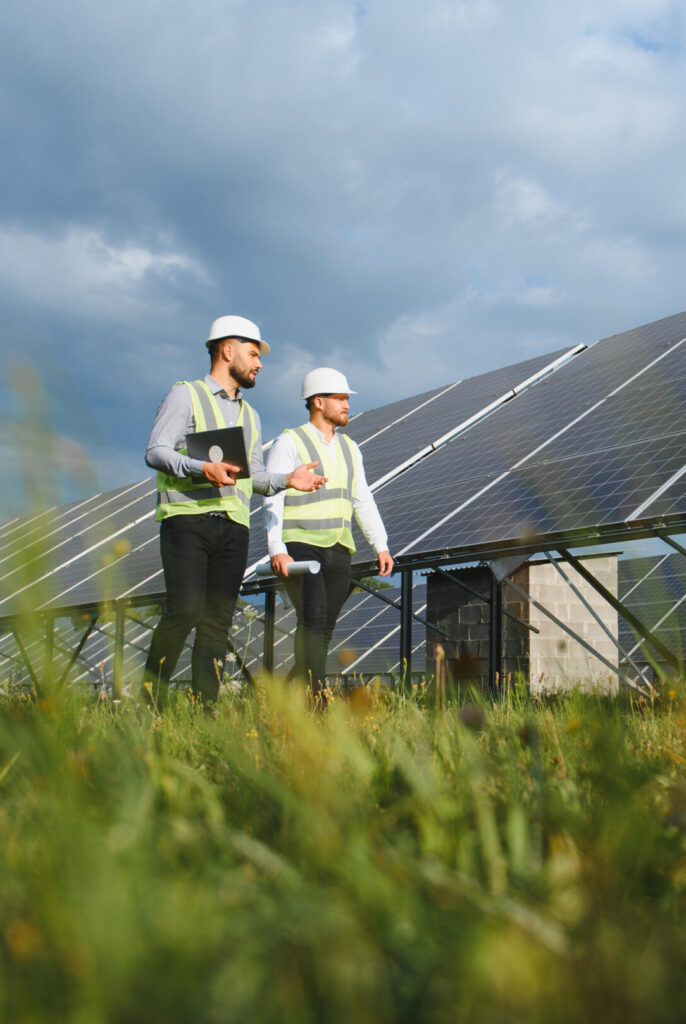
Fragmentation Is the Real Risk—and We Built ENIM to Eliminate It
In the European energy transition, most projects do not fail because the engineering is impossible. They fail—or stall—because responsibility is fragmented. Development hands over to finance. Finance hands over to EPC. EPC hands over to operations. Somewhere between those handovers, risk migrates, accountability dissolves, and timelines stretch until cost of capital and public patience converge into one conclusion: too slow, too complex, too uncertain. We built ENIM because Europe cannot afford an energy transition managed as a relay race. Fragmentation is the hidden multiplier of risk. It creates interface disputes, misaligned incentives, and a pipeline that looks healthy in presentations but behaves brittle in reality. Permitting uncertainty becomes financing friction. Grid ambiguity becomes construction delay. Community resistance becomes schedule volatility. Operational underperformance becomes covenant stress. And because each party optimizes for its own stage, the system as a whole becomes suboptimal—more expensive, slower, and politically fragile. ENIM’s core thesis is simple: if Europe wants speed and scale under European constraints, project development, financing, construction, and operations must be designed as one integrated logic from day one.
What End-to-End Means at ENIM: Continuity of Responsibility, Not Just Vertical Integration
When we say “End-to-End Development,” we do not mean doing everything ourselves in a closed vertical stack. We mean integrating risk, data, standards, and accountability across the full lifecycle—so the project behaves as one coherent system rather than a sequence of disconnected transactions. At ENIM, end-to-end development is an operating discipline: We develop projects with financing logic embedded from the first feasibility assumptions—so bankability is not retrofitted, but engineered. We design for buildability and operational excellence upfront—so EPC execution is not a bespoke adventure, but a repeatable process. We structure land use and community integration as core infrastructure components—so permitting and acceptance are not treated as “soft factors,” but as determinative constraints with measurable outcomes. We establish data continuity across phases—so performance risk is managed through telemetry, standards, and operational governance rather than post-COD firefighting. This continuity is what reduces interface risk. And interface risk is what investors, lenders, and regions increasingly experience as the true bottleneck of the transition.
Why the Old Model Breaks Under Europe’s New Constraints
The classic renewable development model emerged in a different era—one with clearer grid availability, faster permits, cheaper capital, and less scrutiny of land use. Today, Europe is operating inside a stack of converging pressures: climate volatility, food security concerns, biodiversity obligations, grid congestion, and a social contract that demands fairness and local value creation. Under these conditions, treating development, financing, construction, and operation as separable phases is not merely inefficient. It is structurally wrong. Permits increasingly depend on ecological design and credible local benefit. Bankability depends on grid certainty, execution reliability, and long-term performance strategy. Construction depends on standardization, procurement resilience, and repeatable delivery.
ENIM as System Architect: Technology, Community, and Capital in One Design
ENIM is not a conventional project developer competing for isolated sites. We operate as a system architect: we design a repeatable mechanism for regional energy transformation that can be deployed across Europe without losing local anchoring. We work in three layers at once: Technology for us is not only PV hardware. It is dual land-use engineering, grid-aware planning, modular design standards, operational telemetry, and performance governance. Our technology layer is built for replicability and operational reliability—not for one-off optimization. Community for us is not a stakeholder checklist. It is governance, participation, and value distribution designed to be durable over decades. We treat legitimacy as an infrastructure requirement. Without it, the asset becomes politically exposed, socially contested, and operationally fragile. Capital for us is not “funding availability.” It is risk discipline translated into structures investors can trust: bankable contracts, transparent data, standardized execution, and portfolio logic that lowers risk premiums through reproducibility. End-to-end development is the binding force that keeps these three layers coherent. Without it, dual land use becomes a design slogan and community participation becomes a communications exercise. With it, both become bankable, operationally stable features of the infrastructure.
How Our End-to-End Model Connects to Dual Land Use and the Energy Community Movement
ENIM’s end-to-end approach is inseparable from our other two pillars. Dual Land Use Technology addresses a uniquely European constraint: land must produce more than one outcome. Food systems, biodiversity, and energy security must coexist. We design agrivoltaics not as “PV placed on farmland,” but as a productive system where energy generation and agricultural viability reinforce each other. That requires integrated design, measurable agronomic outcomes, and operational practices aligned with farming realities. Energy Community Movement addresses an equally European constraint: legitimacy cannot be imported. If projects extract value locally and concentrate it elsewhere, resistance grows. If projects create tangible local value—through participation, transparency, and fair economic distribution—they become anchors of regional resilience rather than sources of conflict. End-to-end development is what operationalizes both pillars. It ensures that land-use innovation is not lost between design and construction, and that community value creation is not diluted after financing closes. It creates a single chain of accountability that keeps the promise intact across decades, not just across milestones.
Investor Reality: Our System Reduces Risk Where It Actually Appears
Investors increasingly evaluate renewable platforms through one lens: delivery certainty at portfolio scale. Individual project IRRs matter less than the reliability of execution, the stability of operations, and the replicability of outcomes. This is precisely where ENIM’s system depth creates measurable advantage. Fragmented models force capital to price uncertainty repeatedly. Each project is bespoke. Each contract set is a new risk universe. Each interface adds volatility. In such portfolios, scale does not reduce risk—it amplifies it. ENIM’s end-to-end model flips that dynamic. By standardizing what can be standardized and localizing what must be localized, we build an infrastructure production system. Reproducibility lowers variance. Lower variance lowers risk premiums. Lower risk premiums unlock faster scaling. We accelerate not by compromising standards, but by reducing rework: fewer redesign loops, fewer permitting surprises, fewer contract boundary disputes, fewer performance disappointments that trigger covenant pressure. This is why we insist on system continuity. It is not philosophical. It is financial reality.
Speed Without Fragility: Why ENIM Treats Reproducibility as the Core KPI
Europe’s next phase is not an innovation race in modules and inverters. It is a race in execution under constraints. In that race, reproducibility is the decisive capability. If each project is a one-off, scaling becomes a sequence of negotiations. If each project is an instantiation of a platform standard, scaling becomes industrial. ENIM designs for industrial scaling while preserving local anchoring. That is the tension Europe must resolve: scale without alienation, speed without backlash, capital efficiency without social extraction. End-to-end development is how we resolve it.
The European Moment: Why This Model Is No Longer Optional
Europe is entering a decade where the energy transition will be judged by delivery under pressure: affordability, food security, grid stability, ecological constraints, and democratic legitimacy. This is the moment where fragmented models begin to break visibly—not because they are “bad,” but because the system has changed. ENIM was built for this moment. We believe Europe does not need more isolated projects. It needs an operating system for the transition: a repeatable architecture that integrates land, grid, community, and capital into one coherent chain of responsibility. End-to-end development is the backbone of that operating system. And ENIM’s longterm role is to prove—at regional scale—that infrastructure can be delivered faster and more responsibly, with investor-grade rigor and local legitimacy, across Europe’s most demanding realities. That is not marketing. It is the requirement of the era.